Today in 30 seconds
- Ukraine: Russia's strikes on Putin's 74th birthday killed at least 32 people, 22 of them in one apartment block in Pryluky.
- Quebec: the separatist Parti Quebecois will govern with 59 of 127 seats and under 30 percent of the vote; its leader puts a referendum off to 2029 or 2030.
- Iran: Vice President Vance asks for a "meaningful" cut in enrichment, not zero, as Iran and Oman agree on shipping lanes through Hormuz.
- Fed: minutes show most officials expect one more rate hike this year; the 10-year yield briefly touched its highest level since 2002.
- Students: Homeland Security proposes a $70,000 fee for each foreign graduate who works in the U.S. on student training permits.
How to read this: every claim links to its source. Where the brief adds its own read, the wording says so ("What this likely means..."), and the closing piece is labeled opinion.
World
Ukraine: a birthday barrage kills 32, most in one apartment block

Russia fired 48 cruise missiles, an unspecified number of ballistic missiles and 130 drones at Ukraine overnight into Wednesday, Vladimir Putin's 74th birthday, and killed at least 32 people, including five children (Kyiv Post). The worst hit was Pryluky, a town in the northern Chernihiv region, where a cruise missile brought down part of a five-story apartment building. Rescuers there had recovered 22 bodies by Thursday morning. Three of the dead children were one year old, President Volodymyr Zelensky said (Kyiv Independent).
Ukraine's air force said it shot down or jammed 39 of the 48 cruise missiles and 117 of the 130 drones, but only five ballistic missiles. That gap is the heart of the problem: without enough ammunition for its U.S.-made Patriot systems, Ukraine cannot reliably stop ballistic missiles, and it is still racing to build interceptors for Russia's new jet-powered drones (NBC News). Power cuts in Kyiv also knocked out water pumping stations on the city's west bank.
Russia's defense ministry said it hit military factories, including sites where the Ukrainian company Fire Point builds Flamingo cruise missiles and long-range drones (Al Jazeera). Ukraine says it struck two Russian oil sites and a training ground, and posted images of a tanker burning near Sochi that could not be verified. What this likely means: both sides are now trying to win the war from the air, against factories and fuel, while talks go nowhere, and Ukraine's shortage of missile interceptors is what turns those strikes into mass-casualty days. Ask Grok for more context
Quebec: separatists win power, but not a mandate to leave
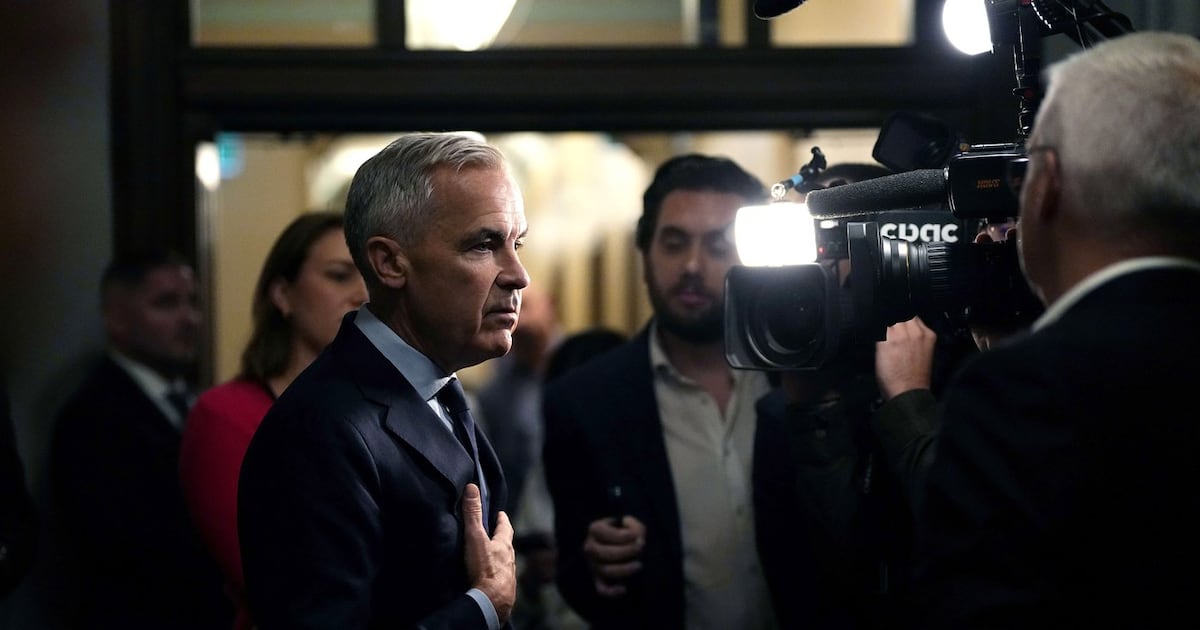
The Parti Quebecois, which wants Quebec to become its own country, will form the province's next government after Monday's election, jumping from three seats in 2022 to 59 of 127 under leader Paul St-Pierre Plamondon (CBC News). That is short of a majority, and it came with less than 30 percent of the vote, a first for a Quebec government. The ruling Coalition Avenir Quebec lost every seat. The Liberals rose from 19 seats to 40, the Conservatives from none to 19, and Quebec Solidaire, the other pro-independence party, won 9.
St-Pierre Plamondon told supporters he still dreams of a Quebec "country," but he says a referendum will wait until 2029 or 2030, after President Trump leaves office, and minority governments in Quebec usually last under two years. Liberal leader Charles Milliard said there is "no way" his party will help on a referendum. Prime Minister Mark Carney called the premier-designate and the two discussed housing, infrastructure, electricity and help for workers hit by U.S. tariffs (CBC News).
Our read: the vote looks more like a rejection of eight years of CAQ rule than a surge for independence. The PQ won only two seats in Montreal and none in Laval or Quebec City. Still, a sovereigntist premier in Quebec City gives Ottawa a new negotiating headache just as Canada fights U.S. tariffs. Ask Grok for more context
Around the world
Iran: Washington softens its line on enrichment. Vice President JD Vance told Reuters Iran must make a "meaningful" reduction in its uranium enrichment capacity, which experts read as a step back from demanding none at all, while Secretary of State Rubio repeated that Iran cannot have a bomb (Al Jazeera). Iran says it will answer U.S. proposals through mediators and has agreed with Oman on safe shipping lanes through Hormuz (Anadolu). Ask Grok for more context
Myanmar: the U.S. starts talking to the generals. The Trump administration has opened direct talks with Myanmar's military-installed government, reversing years of isolation after the 2021 coup, Reuters reports (CNA). The State Department's intelligence chief, Michael Vance, met leader Min Aung Hlaing in September to win an American businessman's release; talks now cover scam centers that target Americans and possibly rare earths. Rep. Gregory Meeks said the shift gives "this murderous regime greater international legitimacy." Ask Grok for more context
Taiwan: a Chinese militia boat off the Pacific coast. A surveillance report seen by Reuters found a Chinese fishing boat that doubles as a maritime militia vessel operating with a coast guard cutter and a research ship off Taiwan's east coast in August, the first known sighting of such a craft there (Straits Times). Taiwanese officials believe China is practicing a possible blockade with military, paramilitary and civilian ships working together. Ask Grok for more context
Brazil: "re-democratise," says the front-runner. Flavio Bolsonaro, who leads President Lula into the Oct. 25 runoff, vowed to use the right's bigger Congress to change the constitution and "re-democratise this country" (Guardian). Critics called it coup talk; his father was jailed for plotting one. Asked to explain on Wednesday, he said "Brazil needs to go back to normal, that's all." His Liberal party now holds 28 of 81 Senate seats. Ask Grok for more context
Plague scare: WHO still lacks answers from Russia. The World Health Organization says it does not know what killed a worker at Siberia's Irkutsk anti-plague institute on Oct. 2 and wants more information from Moscow (AP via The Hill). Russia says she died of pneumonia of unknown cause and that her contacts tested negative (NBC News). WHO rates the public risk as low. Ask Grok for more context
International In-Depth Reporting
Thursday focus: Europe. Not today's breaking news: a slower look at what is under-covered.
Europe builds a trade "kill switch," and Berlin changes sides

Germany and France have asked the European Union to build its most powerful trade weapon yet: a fast-track power that would let the European Commission shut a country's companies, or even the whole country, out of the EU's single market if it wages a trade war against Europe. The request came in a joint letter from Chancellor Friedrich Merz and President Emmanuel Macron to Commission President Ursula von der Leyen on Oct. 5. The letter never names China, and French officials call the proposals "agnostic," usable against any country, but Le Monde wrote that the careful wording "fools no one" (translated from French) (Le Monde, in French).
The letter describes two tools. One would push European firms to cut dangerous dependence on suppliers in any single country. The other is what experts quoted by taz call a "kill switch": a counter-measure for cases where other countries "deliberately try to undermine the restoration of a level playing field" through "political or systematic distortions of our single market" (translated from German), according to the text obtained by Handelsblatt (Handelsblatt, in German). The Berlin daily taz reports that it could be imposed within days, and that the Commission's decisions could be stopped only afterward, by a qualified majority of member governments (taz, in German).
That voting rule is the quiet heart of the plan. EU sanctions need every one of the 27 governments to agree, and sanctions on Russia have repeatedly stalled on a single veto. A trade instrument that is officially aimed at no one avoids that unanimity rule, taz explains. The EU already has a strong tool on paper, the Anti-Coercion Instrument adopted in 2023, which allows counter-tariffs and limits on market access, but Brussels has never used it, not even in the tariff fight with President Trump. Handelsblatt says the logic behind the new plan comes from the Cold War: deterrence, aimed in its telling at both China and the United States.
The bigger news is Germany. For years Berlin led the resistance to a tougher China policy. In 2024 then-Chancellor Olaf Scholz phoned other leaders to try to stop EU tariffs on Chinese electric cars, fearing China would punish German carmakers, and lost (Irish Times). Now Merz, who warned against a trade war at the last EU summit according to taz, has signed on with Macron. The trigger is what the Commission calls a second "China shock." The EU's trade deficit with China passed 1 billion euros a day earlier this year, and factory jobs are being shed across Europe's car and chemical industries. "Since 2024 there has been a dramatic increase in the number of lay-offs in the German car industry due to Chinese overcapacity," Esther Goreichy of the Mercator Institute for China Studies told the Irish Times. "We are now at the tipping point."
Beijing's answer was quick. "Protectionism cannot increase competitiveness," a Chinese commerce ministry spokesman said, urging Germany and France not to push the EU toward protectionist tools or to "politicize" trade (translated from German) (Die Zeit, in German). China says its success comes from research and mass production, not unfair subsidies. Its foreign ministry also reminded Europe that the two economies' supply chains are "highly integrated and mutually dependent," which the Irish Times reads as a hint about China's near-monopoly on rare earths and magnets.
Not every European capital is on board. Spain and Hungary have argued against a trade war and for compromise, taz reports, and the EU's trade commissioner, Maros Sefcovic, sounded hopeful rather than combative before flying to Beijing for two days of talks with Commerce Minister Wang Wentao this week. EU leaders take up the letter at their summit next week. What this likely means: the letter is partly a bargaining chip for Sefcovic, but it also marks a real shift. If Berlin, the EU's biggest exporter to China, is now willing to threaten market access, Europe's long habit of complaining about Chinese overcapacity without acting on it may be ending. Ask Grok for more context
United States
A $70,000 price tag on foreign graduates who stay to work
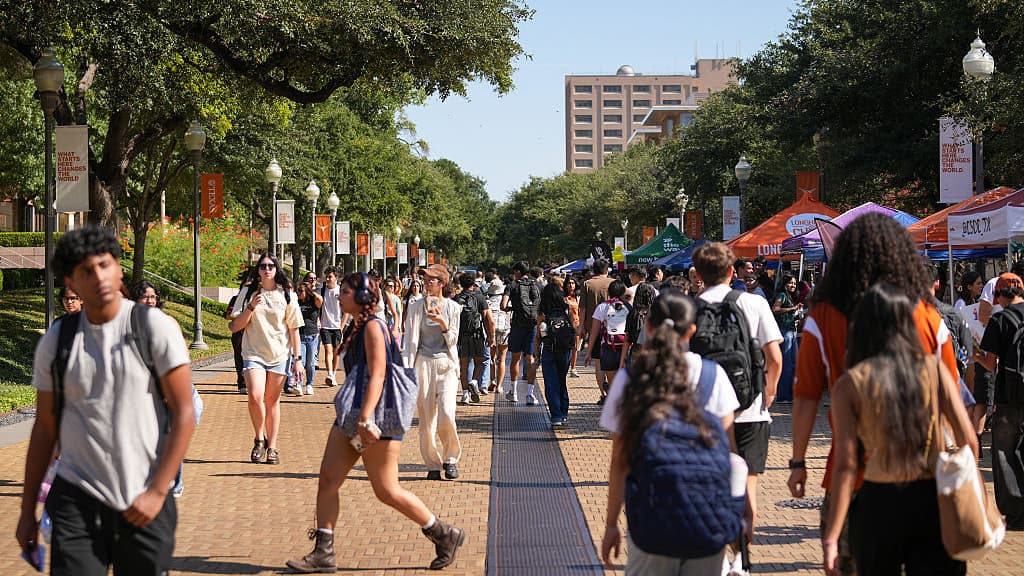
The Department of Homeland Security has proposed charging schools $70,000 for each international student who joins Optional Practical Training, or OPT, the program that lets foreign students work in their field for up to a year during or after their studies, plus $30,000 for each additional stint (Time). Today students pay about $500 to apply. DHS says schools may pass the fee on to students or employers. The rule is published Thursday, and comments are open until Nov. 9.
DHS argues OPT has "ballooned into an uncontrolled guest worker pipeline." It says it found more than 10,000 students claiming jobs with "highly suspect employers," and empty buildings at addresses where hundreds were supposedly employed. Grants of OPT work permits rose to 194,554 in 2024 from 160,627 in 2023. The department also says OPT is used to get around the H-1B visa for skilled workers, and that without the fee it may shut the program down.
Critics say the fee is illegal and self-defeating. Courts have already blocked a $100,000 H-1B fee, and Doug Rand of the Talent Mobility Fund predicts this rule "isn't going to fare well in the courts." A survey by the Institute for Progress found far fewer students would try to stay if the fee took effect. College groups warn that losing foreign students would raise tuition pressure on Americans. The real question is whether this is a fraud fix or an enrollment cap by price; the Opinion piece below takes it up. Ask Grok for more context
Democrats sue over government-paid ads that praise Trump
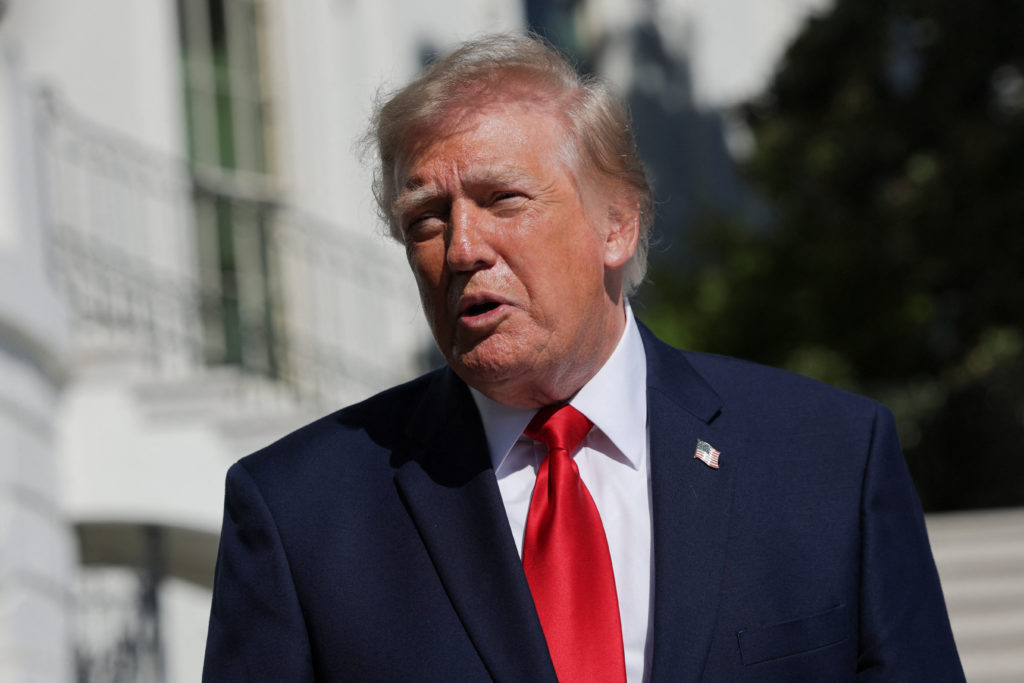
The Democratic National Committee sued the Trump administration in federal court in Washington on Wednesday over TV ads paid for with Homeland Security money that promote the president's message weeks before the midterms (AP via PBS). The suit calls the spots illegal "publicity or propaganda" and asks the court to stop federal funding for them. The ads, which began in September, have cost more than $12 million to air so far, according to AdImpact, out of $20 million in DHS funds set aside for them.
The money comes from a $175 million package Congress gave DHS for immigration enforcement. On Monday Mr. Trump called the ads "positive promotion for our Great U.S.A." and said his MAGA Inc. super PAC would pay going forward. On Tuesday a fifth ad, about U.S. military action in Venezuela, aired anyway with the line "paid for by the U.S. Government," and he said of repaying what was already spent, "we'll decide."
The White House says the spots are public service announcements like those past administrations ran. Legal experts quoted by AP say most past announcements helped people use a specific program, which these do not. The backlash has been bipartisan, so a court ruling may matter less than whether the super PAC actually takes over the bill. Ask Grok for more context
What's changing in finance
The Fed's minutes point to one more hike, and long rates keep climbing
Minutes of the Federal Reserve's September meeting, released Wednesday, show all 12 voters backed the quarter-point increase to a range of 3.75 to 4 percent, and "most participants" expect another increase "would likely be appropriate by year end" (Federal Reserve). Some officials worried that after more than five years of inflation above 2 percent, higher prices could start to shape wage and price decisions. Fed staff put core PCE inflation, which leaves out food and energy, at 3.4 percent in August. They also blamed part of the rise in long-term yields on heavy borrowing to finance AI data centers (summary via Securities.io).
Markets do not expect that hike this month. CME's FedWatch tool put the odds of an October increase at 17.2 percent, down from 37.6 percent a week earlier (Reuters via Straits Times). Stocks slipped from records, with the S&P 500 down 0.22 percent to 7,801.75, while homebuilders fell 2.9 percent after mortgage rates hit a near three-year high. Oil eased after the International Energy Agency agreed to release emergency stocks faster, with diesel first. Our read: as long as the Iran war keeps oil near $100, the Fed sees energy as a risk to inflation expectations, and borrowers pay through the long end of the curve. Ask Grok for more context
AI, autonomy and tech
Musk: Tesla and SpaceX, not TSMC, will run the Terafab

Elon Musk says Tesla and SpaceX alone will build and operate Terafab, their planned AI chip complex in Texas. "Let there be ZERO doubt about that," he posted on X, adding, "Maybe TSMC subleases part of the Terafab if they want, but nothing more than that" (Quartz, citing Reuters). He was answering a post that said TSMC, the Taiwanese firm that makes most of the world's advanced chips, was the likeliest owner. Intel CEO Lip-Bu Tan said the same day that Intel remains a partner.
The chips are meant for a much bigger plan. SpaceX's new space-safety page says it intends to run up to 100,000 Starlink satellites and up to 1 million "Starmind" AI computing satellites, working in clusters of about 10 linked by roughly 10 terabits of bandwidth, with deployment of thousands starting as soon as late 2027 (Teslarati). Starlink has a little over 11,000 satellites up today. SpaceX also says only about half of some 650 other maneuvering satellites it met this year shared their position data, and it calls hiding maneuvers "counterproductive." Astronomers and environmental groups oppose the Starmind filing. SpaceX shares fell 2.5 percent Wednesday on reports it is seeking $40 billion in financing for Nvidia chips (Reuters via Straits Times). What this likely means: Musk wants to own the whole chain, from chip fab to orbit, which is bold and very capital hungry. Ask Grok for more context
Church of Jesus Christ
A $3 million gift for the National Juneteenth Museum

The Church of Jesus Christ of Latter-day Saints has committed $3 million to build the National Juneteenth Museum in Fort Worth, Texas, announced Wednesday at a celebration of Opal Lee's 100th birthday (Church Newsroom). Lee, known as the "Grandmother of Juneteenth," campaigned for decades for the holiday that marks June 19, 1865, when news of emancipation reached enslaved people in Texas. The planned 50,000-square-foot museum will include a genealogy center run with FamilySearch to help families trace records that have long been hard for many African Americans to find.
"This deed won't go unnoticed," Lee said. Elder Michael A. Dunn, President of the Church's United States Southwest Area, said the museum will help people understand "this story of our nation that still needs to be told." The Church also gave 38,000 pounds of food to five local food banks, part of its 250 truckloads for the nation's 250th anniversary. The gift builds on earlier projects such as the Freedmen's Bureau records effort. Ask Grok for more context
Highland and Utah
Amendment B: should tax-raising initiatives need 60 percent?
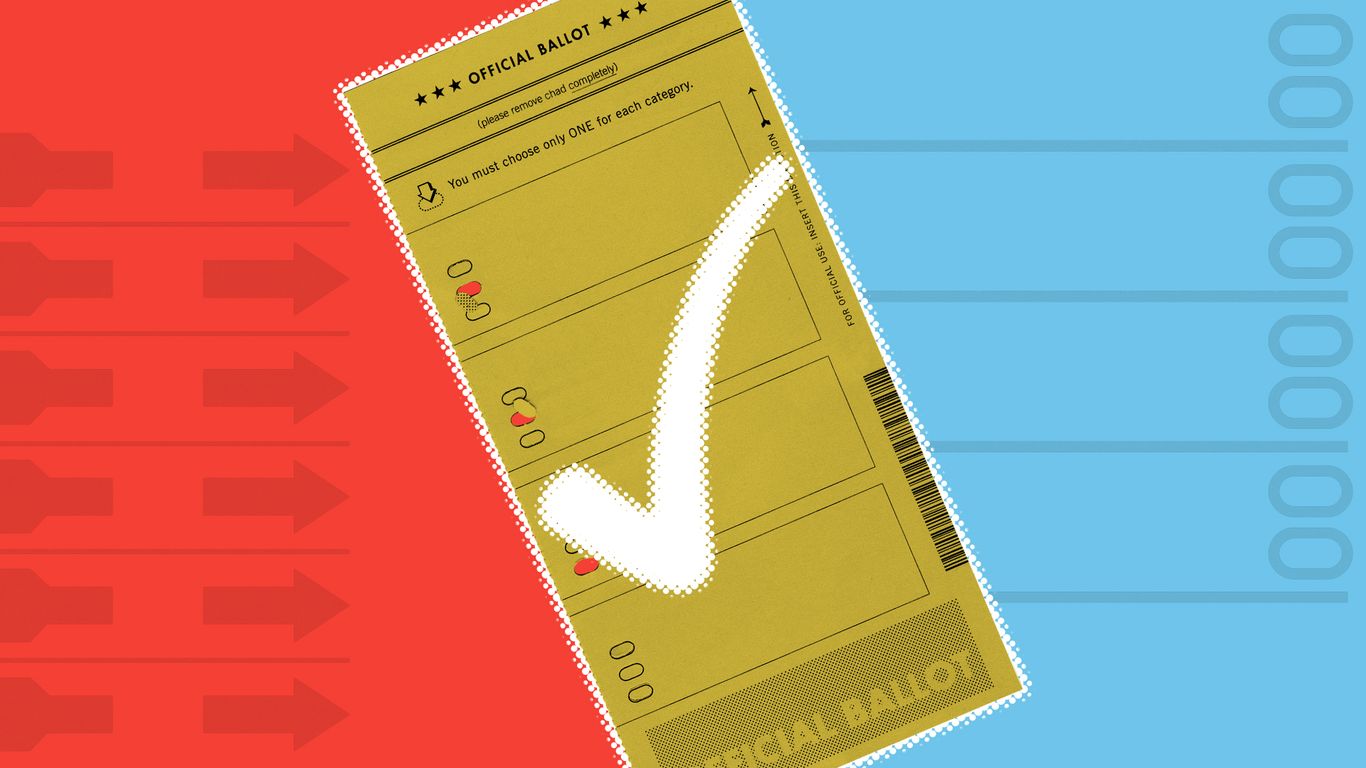
Utah voters will decide Nov. 3 on Amendment B, a Republican-backed change to the state constitution that would require 60 percent approval, instead of a simple majority, for citizen ballot initiatives that raise taxes (Axios Salt Lake City). Mail ballots start going out Oct. 13. Sponsors Sen. Lincoln Fillmore and Rep. Jason Kyle say, "If you want to raise your neighbors' taxes, you should have broad support from your neighbors." The Utah Taxpayers Association backs it.
Opponents in Utahns Protecting Our Constitution call it unnecessary; their leader, Elizabeth Rasmussen, says, "Allowing 40% of the population to block some of these policies just doesn't seem right." Had the rule existed in 2018, Medicaid expansion and medical marijuana, which each passed narrowly, would have failed. A 2024 amendment letting lawmakers change citizen initiatives was voided by a judge over misleading ballot language. Our read: both sides have a fair point, since a supermajority protects against narrow tax hikes but also makes citizen action much harder than legislative action. Ask Grok for more context
From the podcasts
Pricing SpaceX after Starship's orbit, and Grok Bot opens its doors

- Brighter with Herbert: opens with Morgan Stanley analyst Adam Jonas, who he says puts SpaceX about 40 percent below the biggest AI stocks on a growth-adjusted basis, with a $300 target against a share price around $174, and calls a successful Starship catch on Flight 15 this month potentially "the biggest catalyst since the IPO" (0:20). Those are an analyst's forecasts, not results.
- ARK Invest: the ARK team says Starship's latest flight was the first time this vehicle reached orbit carrying revenue-earning V3 Starlink satellites, with booster and ship both brought down softly in the ocean (18:33). They argue full reuse could cut launch costs below $100 a kilogram and that each fully loaded launch could add "something approaching a billion dollars in annual incremental revenue" (19:38), an estimate that depends on many assumptions.
- Brighter with Herbert and Farzad: both shows cover Musk's post that Grok Bot will now use whichever backend model fits a task best, including rival models such as Claude (Herbert, 1:31). Herbert calls the agent race "the most important fight in AI right now" because the winner "ends up owning the relationship with you" (0:44), and Farzad says the switch has "a lot of long-term implications" for SpaceX, data center companies, Colossus and Starmind (0:19). Ask Grok for more context
Fix OPT Fraud With Enforcement, Not a $70,000 Toll
The Department of Homeland Security has a real complaint about Optional Practical Training, the program that lets foreign graduates of American colleges work here for a year or more. Its investigators say they found more than 10,000 students claiming jobs with "highly suspect employers," and offices that turned out to be empty buildings with locked doors. Fraud like that cheats the honest students, the employers who play by the rules and the American workers who compete for those jobs. A government that ignores it is not being generous; it is being careless.
But the answer DHS chose, a $70,000 charge for each student's first stint and $30,000 for each one after, is not a fraud fix. It is a price high enough to end the program for most people while technically leaving it open. A sham employer that invents phantom workers is already breaking the law, and a fee does not find it. Investigators do. If the department cannot audit a program that grew to about 195,000 work permits in 2024, the honest request is for more investigators, employer verification and site visits, paid for by a modest fee, not a toll that is more than a year's pay for many entry-level jobs.
The strongest case for the rule deserves a fair hearing. Critics on the right, and some labor advocates on the left, have long argued that OPT, especially its STEM extension, works as a cheap side door around the H-1B cap: employers can skip payroll taxes for many students and can pay less than for a visa worker. If that is the problem, it is a policy question Congress should settle, by capping the program, requiring prevailing wages or ending the tax break, in the open, not something an agency should settle by setting a price tag no one can pay.
There is also a cost the rule's backers rarely count. Foreign students who pay full tuition help keep prices down for American students, and many of the most capable stay to start companies or fill research jobs that would otherwise go to Toronto, London or Shenzhen. A survey by the Institute for Progress found that far fewer students would try to stay if the fee took effect. Losing them would not open those jobs to Americans so much as move them abroad.
And the legal footing looks weak. Courts have already blocked a $100,000 H-1B fee, and advocates expect this one to meet the same fate. A rule that dies in court fixes nothing while frightening off next year's applicants.
Enforcement also has a track record the fee does not. By the department's own account, it was investigators, not a price tag, who found the suspect employers and the locked, empty offices. That is the tool that works. Scale it up, bar the sham companies for good, and the honest majority of students and employers can keep using a program Congress has let stand for decades.
A conservative approach would be simple: enforce the law hard against fake employers, publish the results, and ask Congress to decide whether OPT should exist and at what size. That respects both the rule of law and the country's interest in keeping talent it has already trained. Ask Grok for more context
Being Well Informed
Trade Wars Are Class Wars, by Matthew C. Klein and Michael Pettis

As Europe weighs a weapon against Chinese overcapacity, this 2020 book from Yale University Press explains where overcapacity comes from. Klein and Pettis argue that trade wars, such as China against the United States or Germany against Spain, start with inequality inside countries, according to Ann Pettifor's review in the Times Literary Supplement (review).
- Low wages make surpluses. When income shifts to the rich and to companies, who spend less of what they earn, a country cannot buy all it makes and exports the excess, as Pettifor summarizes the argument.
- Germany is a case, not only China. The authors blame stagnant wages, welfare cuts and resistance to public borrowing for Germany's surpluses before 2008, which piled up in neighbors like Spain.
- America absorbs the rest. Because the dollar is the world's reserve currency, the U.S. becomes the outlet for other countries' surpluses. Pettifor calls the book "eagle-eyed" and clear but says it treats the U.S. too much as a victim and its proposed remedies are "weak and likely ineffective." Ask Grok for more context
By the Numbers
About one in ten American workers belongs to a union
The union membership rate is the share of people who work for a paycheck who belong to a labor union. In 2025 it was 10.0 percent, or 14.7 million workers, the Bureau of Labor Statistics reported in February (BLS). That is half the 20.1 percent of 1983, the first year with comparable data.
U.S. union membership rate, 1983 to 2025
Union members as a percent of all employed wage and salary workers, annual. Axis starts at zero.
The decline was steady for four decades: 16.0 percent in 1990, 13.4 percent in 2000 and 11.9 percent in 2010. It has barely moved since 2022. The one bump, to 10.8 percent in 2020, came in the pandemic year, when millions of jobs disappeared, so it is not a sign of a union revival.
The average hides two very different worlds. In government jobs, 32.9 percent of workers are union members, more than five times the 5.9 percent in private companies. Teachers, police and firefighters are among the most unionized; finance and restaurants are among the least. The public and private sectors now have about the same number of members, 7.3 million and 7.4 million. Union members also earned more, a median of $1,404 a week against $1,174 for nonunion full-time workers, though BLS warns the gap partly reflects differences in jobs, industries and places, not only the union itself. The chart does not show the workers covered by a union contract who are not members, about 1.8 million more. Ask Grok for more context
Come Follow Me
This week (October 5 to October 11): “He Hath Borne Our Griefs, and Carried Our Sorrows” (Isaiah 50-57)
The Lord’s ways are higher than mine.
“For my thoughts are not your thoughts, neither are your ways my ways, saith the Lord.” Isaiah 55:8
“For as the heavens are higher than the earth, so are my ways higher than your ways, and my thoughts than your thoughts.” Isaiah 55:9
The lesson invites readers to talk about the Lord's higher ways, and Elder Ellis cites these same verses when he says the Lord knows what is best.
“Do we trust His commandments to be for our good? His leaders, though imperfect, to lead us well? His promises to be sure? Do we trust that Heavenly Father and Jesus Christ do know us and want to help us? Even in the midst of trials, challenges, and hard times, do we still trust Him?”
“Regardless of the issue, hard can be good for those who will move forward with faith and trust the Lord and His plan.”
Elder Stanley G. Ellis, “Do We Trust Him? Hard Is Good”, October 2017 general conference · Watch this passage (at 1:27)
From a Come Follow Me podcast: Reading Isaiah 55:7 to 9, guest Dr. Ezra Gwilliam explains that the Lord thinks about us and our sins differently than we think about ourselves, so someone who feels broken after sinning should forsake that way of thinking and trust Him, because "We should never ever misjudge Jesus." (followHIM, at 1:30:38)
Talk it over: Discuss this with Grok