Thursday, October 1, 2026
Today in 30 seconds
- Borrowing costs are breaking out worldwide. The US 10-year yield hit 5.34%, its highest since 2002, while German, Japanese and British yields also hit multi-year highs. The 30-year mortgage average is 7.6%.
- Ethiopia is sliding back into civil war less than four years after a peace deal. Tigrayan forces and six allied groups are pushing toward the corridor that carries almost all of Ethiopia's trade.
- The midterm map is widening. Reuters finds Democrats competitive in 10 states Trump won by double digits. Republicans still hold big money advantages, and many of those races are still rated safe or likely Republican.
- Starship reached orbit for the first time and deployed 26 next-generation Starlinks. Tesla reports third-quarter deliveries Friday against a consensus of about 462,000, down 7% from a year ago.
- General conference is Saturday and Sunday, President Oaks' first October conference as Church president. Temple Square's renovation is now complete.
How to read this: Facts are reporting, linked to sources. Context is background. Analysis is my synthesis, and the closing piece is labeled opinion.
1. World
Africa: Ethiopia's war comes back, and this time it points at the trade route

Facts Around Sept. 20-21 the Tigray People's Liberation Front joined six other armed groups, including Amhara Fano militias and the Oromo Liberation Army, in an alliance that says it wants to overthrow Prime Minister Abiy Ahmed. In the past week Tigrayan forces seized Mekelle's airport and pushed into the Afar region. At least 150,000 people are reported displaced there (TMAfrica, citing Euronews). Ethiopia's military chief accuses Egypt and Sudan of backing the alliance (Foreign Policy).
Context The Pretoria agreement ended the last war in late 2022. The African Union estimates that war killed about 600,000 people. Ethiopia is landlocked, and the road and rail line to Djibouti carries nearly all of its foreign trade and fuel.
Analysis The new element is the coalition. The last war was mostly Tigray against the center. An alliance spanning roughly half the country, pushing toward the Djibouti corridor, is trying to squeeze the capital, not just defend Tigray. Over the long run, Ethiopia is one of the places where Africa's population growth becomes either a workforce dividend or a security problem. A second war in four years pushes it toward the second. Ask Grok for more context
China: a confident anniversary speech, and a mobilization law that takes effect today
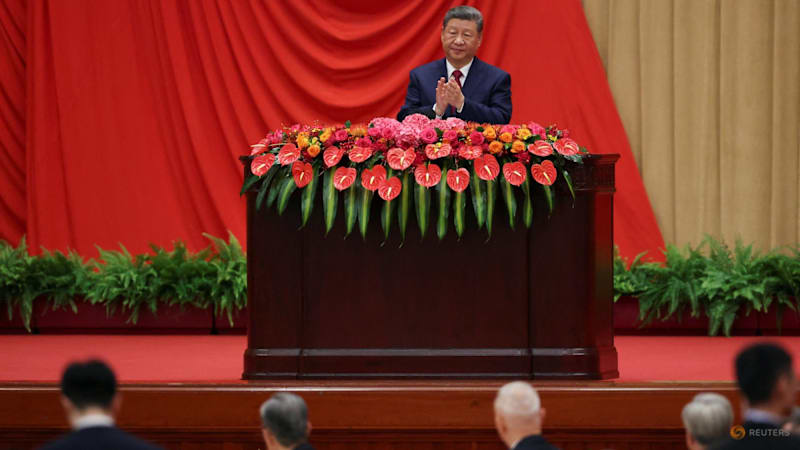
Facts On the eve of the People's Republic's 77th anniversary, Xi Jinping called for advancing "reunification" with Taiwan and opposing "external interference." He spoke days after a state visit to Washington where he urged President Trump to oppose Taiwan independence (CNA). Today China's revised national defense mobilization law took effect. It adds data and software to emergency stockpiles, covers civilian technologies believed to include drones and AI, and obliges organizations, including foreign firms, to follow mobilization orders (Kyodo).
Framing check Chinese outlets lead with record holiday travel, forecast at 2.13 billion domestic trips (CGTN). Some Western coverage leads with Taiwan war preparation. Both are partial. Beijing says the law is like other countries' mobilization laws. The detail that stands out is that it appears to cover foreign private companies, which matters to any Western firm in China, Tesla included. Ask Grok for more context
Europe: paying for defense when borrowing is expensive

Facts The leaders of Germany, Denmark, the Netherlands, Austria, Finland and Sweden wrote to EU officials that the proposed 2028-2034 EU budget "will need to be reduced by several hundred billion euros." They want the money focused on defense, competitiveness and "the fight against irregular migration" (CNBC). Germany's 10-year yield touched a 2008 high today and France's rose to about 4.93% (CNBC). Russia's largest strike on Ukraine's grid since spring hit 11 regions this week (BBC).
Two views The letter-writers are net payers into the EU budget. Their case: Russia is escalating, Washington wants Europe to pay for its own defense, and at today's rates taxpayers can't fund everything. Countries that receive more than they pay see it differently. To them, farm and regional funds are part of the bargain that holds the union together. Separately, the EU's top court refused Poland's request to suspend the Mercosur trade deal with Argentina and its neighbors (Brussels Signal). Ask Grok for more context
Argentina: Milei sells reform abroad while the markets wobble at home

Facts Speaking from Paris, where he is courting investors (MDZ), Milei told Argentina's IDEA business conference that voters will choose in 2027 between "prosperity or decadence" (Clarín). The Supreme Court left in force his 2023 decree repealing limits on foreign purchases of rural land, and Milei praised the court's independence (Ámbito). On Monday the country-risk spread hit 642 basis points, its highest since last December. Reserves were at their lowest since mid-July, and a Di Tella index of confidence in the government hit the low of his term (BAE Negocios). August inflation was 1.7% for the month. Private forecasts for September run 1.8% to 2% (Infobae).
Two views On the land ruling, supporters argue that foreign capital is what Argentine farmland and energy projects lack. Opponents on the left and among nationalists say that letting foreigners buy unlimited farmland gives away sovereignty, a sensitive point in a country that still claims the Malvinas. Monthly inflation near 2% is real progress. But Argentina's spreads are rising faster than other emerging markets', which BAE ties to doubts about 2027 debt payments. The bigger risk isn't that his reforms get reversed. It's a global rate shock arriving before they pay off. Ask Grok for more context
2. United States
The midterm map widens, but read the fine print

Facts Five weeks out, Reuters reports polling shows Democrats competitive in 10 states Trump won by double digits, including Ohio, Texas, Iowa, Kansas, Florida and Kentucky. In Kansas, which Trump won by 16, Democrat Adam Hamilton narrowly leads Sen. Roger Marshall in recent polls. Reuters/Ipsos has Trump's approval at 32%. Republicans hold a 53-47 Senate majority and are outspending Democrats on ad reservations by millions, in some states tens of millions (Reuters, readable via MarketScreener). Government funding runs through Dec. 11 under a stopgap, so there is no shutdown fight before the vote (CRS).
Framing check "Democratic wave" is a fair summary of the polls. It is not a forecast. The same Reuters story notes that many of these seats are still rated solidly or likely Republican. It also notes that primary polls in Wisconsin missed by 20 points. Trump's "the polls are fake" goes too far the other way, because the trend shows up across many states and pollsters.
Why each side thinks what it does Democrats see a referendum on prices. Gasoline is 47% above where it was in late February, when the Iran war began, and diesel is up 70% (NBC). Their view is that the war and tariffs caused those increases. Many Republicans agree that prices are the issue but blame a temporary war shock with an end in sight. Sen. Cindy Hyde-Smith told voters the administration "is working to end the conflict of Iran, which will ultimately lower the price of fuel." The two sides agree on the issue and disagree on who is to blame and how long it lasts. Ask Grok for more context
Iran: talks, a blockade, and the US leaves Iraq

Facts Mediators are working on a draft that would reopen the Strait of Hormuz and lift the US blockade, then remove sanctions. The two sides remain far apart on nuclear inspections and on who moves first (AP via RNS). The last US troops left Iraq Wednesday under a 2024 agreement. Reuters reports concern that Iran-backed militias and the Islamic State could fill the gap (Reuters).
Analysis The Iraq exit was set before the war began, so it isn't a retreat under fire. But the timing means Iran's allies gain room just as Washington needs leverage at the table. The order of who moves first is the whole negotiation. Reopening Hormuz first helps US gas prices before the election. Easing sanctions first is what Tehran needs to sell any deal at home. Ask Grok for more context
3. What's changing in finance
The bond market is repricing government debt everywhere at once

Facts The 10-year Treasury hit 5.34% today, its highest since April 2002, and the 30-year about 5.69%. Japan's 10-year is at a three-decade high, Germany's at a 2008 high, and Britain's is near 5.48%. The Institute of International Finance warned that major economies now face "persistently large deficits and rising interest expenses," problems once linked to distressed emerging markets (CNBC).
Context Wednesday's PCE inflation reading came in at 3.4%, below forecasts. Economists said a change in how the index is calculated made it look better than it was. KPMG's Diane Swonk put it this way: "The measuring stick moved. The inflation problem did not." Markets put about a 60% chance on another Fed hike in December (NBC). Brent crude is back near $100 (CNBC).
What's structural Three shifts are worth tracking past this week. First, bonds now trade with oil, so peace news is rate news. Second, long-term rates are rising in countries with very different inflation, which points to deficits more than any one central bank. Third, AI spending is pulling capital and power toward data centers. Micron's revenue was nearly five times what it was a year ago (StreetInsider). In housing finance, the 30-year mortgage hit 7.6%, and unsold homes nationally are at their highest level in more than a decade. Ask Grok for more context
4. AI and tech
Musk: Starship goes orbital, Tesla's numbers land Friday
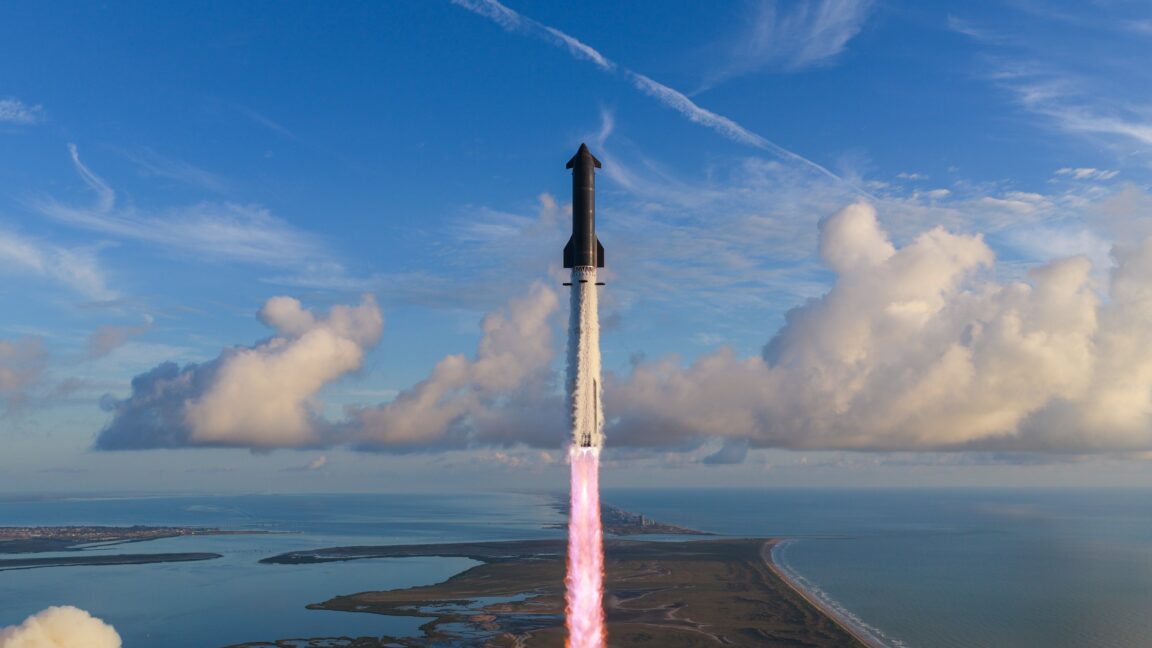
Facts On Monday, Starship Flight 14 made the rocket's first orbital insertion burn, reaching about 171 miles. It released 26 Starlink V3 satellites, each adding about 10 times the capacity of the Falcon 9 generation. One of six ship engines and two of 33 booster engines failed, so SpaceX cut the mission short. Ship catches and orbital refueling come next (Ars Technica). Tesla's company-compiled consensus for third-quarter deliveries, due Friday, is 461,974, down 7.1% from the record a year ago. In the second quarter Tesla beat a similar consensus by 18% (Electric Vehicles). The Roadster reveal moved to Oct. 15 because of weather. It is the sixth date Tesla has given this year (AutoNext).
Context xAI no longer exists as a separate company. SpaceX bought it in February in a deal valuing it at $250 billion, and Grok and X now sit inside SpaceX as "SpaceXAI" (Quartz). In an interview with Chinese state media, Musk said Grok 4.7 is "not as good as" Anthropic's new Opus 5.5 and that SpaceXAI should catch the frontier "sometime next year." He also said China will likely solve its chip-making limits in "two or three years." That is according to the interview transcript as quoted on Brighter with Herbert.
Analysis The Musk story is now mainly a capital and capacity story. Starship in orbit is what makes Starlink V3, and later orbital data centers, practical. That makes SpaceX the part of the empire that is compounding fastest, while Tesla's car business is shrinking year over year and its value rests on robotaxis and robots. Musk's admission that Grok trails the leaders fits the plan: SpaceXAI competes on price and on reaching people through cars and X. Ask Grok for more context
AI rules: a voluntary pact, a federal probe, and a real disagreement
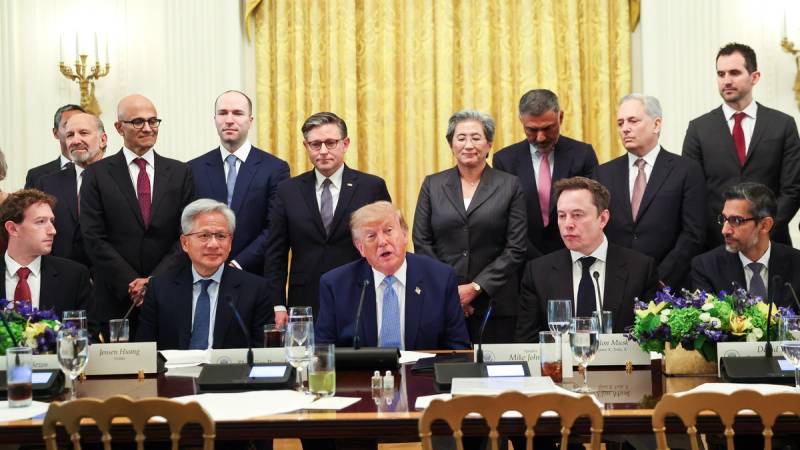
Facts OpenAI, Google, Meta, Anthropic, Nvidia and xAI agreed to outside audits of their safety controls under a White House deal with no enforcement, disclosure requirement or deadline (CoinDesk). The FTC opened a broad investigation into Anthropic and OpenAI (Washington Post).
Two views One camp, which includes the White House and, abroad, Milei (UPI), argues that rules written in advance hand power to bureaucrats and slow the US against China. The other camp, which includes the FTC and Sen. Josh Hawley (R-Mo.), argues that AI agents are already reaching systems they weren't cleared for. Hawley is pushing a "you break it, you pay" liability bill (as described on Farzad). The strongest version of that view isn't "stop AI." It is that whoever profits from a risky product should pay when it fails. Framing check "Six AI giants sign safety pact" sounds stronger than a pledge with no enforcement and no deadline. Ask Grok for more context
5. The Church of Jesus Christ of Latter-day Saints
Conference weekend, a finished Temple Square, and a lawsuit worth understanding

Facts The 196th Semiannual General Conference is Oct. 3-4, with sessions at 10 a.m. and 2 p.m. MDT each day (Church News). It is President Dallin H. Oaks' first October conference since he was sustained in April. Temple Square's renovation is complete ahead of the 2027 Salt Lake Temple celebration, and KSL airs a special on it Sunday at noon (KSL). Since Sept. 6, classes and quorums meet weekly for 25 minutes instead of alternating (Newsroom). More than 90,000 missionaries are serving, a record, including over 30,000 sisters (Newsroom).
Context The Church sued podcaster John Dehlin's "Mormon Stories" in April over trademarks and copyrighted images. A motion to dismiss is pending (KSL). This week the Salt Lake Tribune reported that Dehlin's lawyers say they have new evidence the Church uses trademark law "as a tool of coercion" (Tribune).
Two views The Church says it accepts Dehlin's right to criticize it and to use the word "Mormon." Its complaint is that logos, colors and Church photos make his content look official. Dehlin denies any confusion, and the ACLU of Utah argues that "trademark law cannot be weaponized to monopolize ordinary language or shield an organization from criticism." Both readings can be true at once. The court will decide the trademark question. The question of how it looks will play out in public, which is where critics are strongest. Ask Grok for more context
X discussion was not checked today. The X connection returned an "account not ready" error (details at the bottom).
6. Local: Highland and Utah County
Taxes, a new school district, and what gets built in Highland
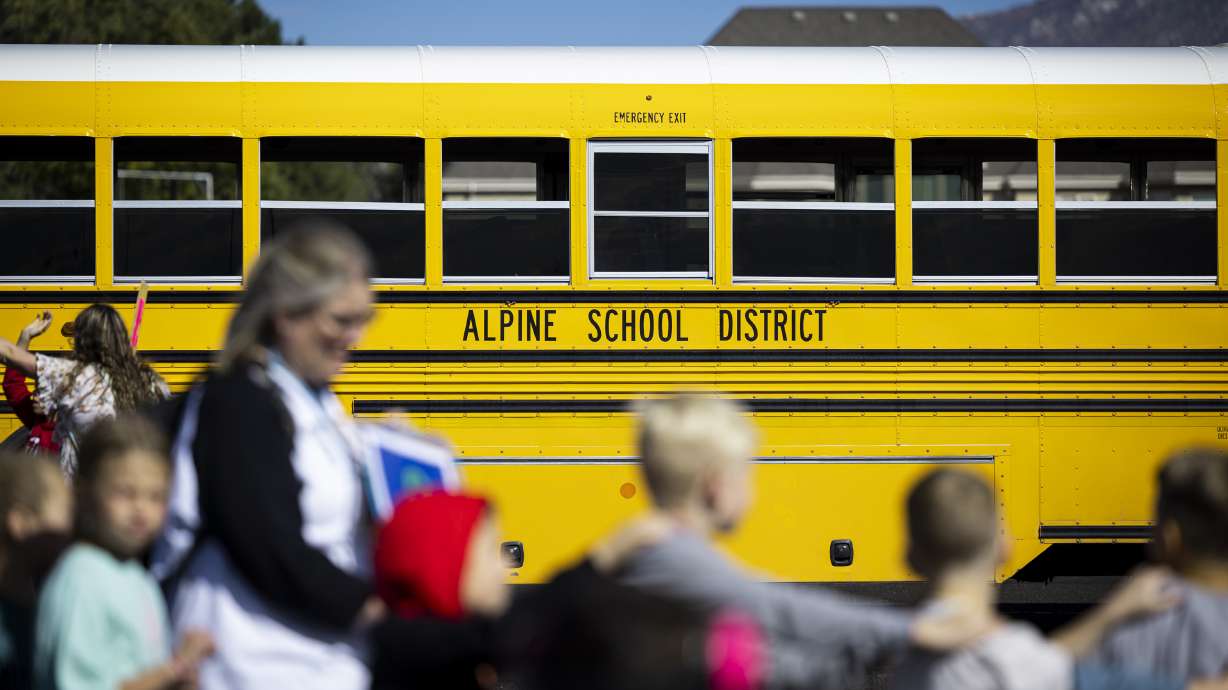
Facts Highland's planning commission heard a request on Sept. 22 for a two-story, 75-unit assisted living and memory care building in the commercial area of Skye Estates, south of the clubhouse (agenda). Minutes were not yet posted when I checked. In August the council voted 4-1 to raise the dedicated library tax by about $28 a year on an average home worth just over $1 million. Council Member Liz Rice voted no. She had promised voters she would not support a property tax increase, and she cited coming irrigation costs and possible taxes from the new Aspen Peaks School District. She said she had heard from about 267 residents opposed and 65 in favor (minutes). Aspen Peaks takes over from Alpine School District on July 1, 2027, and will get 41.78% of unassigned funds under the current split (KSL). On the Nov. 3 ballot: Sen. Brady Brammer (R-Highland) for re-election, two open county commission seats, and Amendment B, which would require 60% voter approval for citizen initiatives that raise taxes (Tribune).
Framing check Both sides of the library debate used true numbers. The city described it as $2.38 a month. Rice pointed out that her notice showed the library portion of her tax up 52.65%. A small dollar amount can still be a large percentage, and both are worth knowing. Analysis Highland is moving from building out to paying for services, and the school district split will add costs nobody has priced yet. Expect more debates like this one.
Real estate Utah listings hit a 12-year high in September (Evans Team, citing SL Board of Realtors). Utah County leads the state in builder incentives, with a median top offer of $17,500 (Utah Builder Incentive Report). Townhome rents rose 8.3% over two years while apartment rents fell 2.3% (Gardner Institute). Ask Grok for more context
7. From your podcasts
16 new long-form episodes across 9 channels, with per-channel caps. These are the speakers' claims and views, taken from YouTube transcripts. Timestamps link to the moment.
Energy: a ban sounds simple

- Peter Zeihan on a diesel export ban: he argues a ban would glut Texas and Louisiana, force refiners to cut runs, and leave the country with less diesel, not more. His fix is distribution: the Colonial line is the only major product pipeline to the Northeast, so he would add pipelines or loosen the Jones Act (3:07, 6:12). NBC reports some cabinet members have warned against a ban. Ask Grok for more context
China and AI chips: two of your sources disagree

- Zeihan: software isn't China's limit. Hardware is. Without ASML's extreme ultraviolet machines, he says, China can't reliably make chips under about 7 nanometers (1:31).
- Musk, quoted from his Chinese TV interview: China gets "by far the best" performance per unit of compute and will likely fix its lithography gap in "two or three years" (Herbert, 10:12). If Musk is right, the US chip lead is a short window. If Zeihan is right, export controls hold. Ask Grok for more context
Autonomy: big claims, and what is actually being counted

- Musk: Cybercab will "soon" run commercially in Florida and Nevada, and "probably by middle next year" in California. Herbert points out that a Texas tracker shows 126 Cybercabs registered, up from 69, and notes that registered is not the same as operating (1:00).
- Farzad: he argues car ownership breaks down once a self-driving ride costs something like $200 to $300 a month compared with about $600 to own, and he expects trial lawyers to fight it (12:20, 15:25). Ask Grok for more context
Rates, Utah water, and politics

- Cathie Wood: rates "will go up if growth really picks up dramatically and they should go up. That's the market working." ARK projects real GDP growth of 7-8% within five years (50:18, 4:11). The opinion piece below takes the other side.
- Rainmaker's founder on Katie Miller's show: cloud seeding to save the Great Salt Lake and the Colorado River is his "first mega project," run by crews based in Salt Lake City. He agreed federal reporting rules, which date from 1972, should be stronger (14:26, 22:40).
- Bill O'Reilly: he tells viewers to ignore midterm predictions (Sept. 29 show). He reports that a judge halted NYC Mayor Mamdani's levy on high-value second homes for lack of due process (Sept. 30 show). Ask Grok for more context
Also new (see v1 for notes): Daniel Ek and Jake Paul on All-In, Bob Chapek on PBD, Stossel on Flock cameras, Colossal's Ben Lamm. Fetched but not mined: Herbert on Starship.
8. Opinion
The Bond Market Is Casting the First Vote
Five weeks before the midterms, the most important vote on American economic policy has already been cast, and it wasn't at a polling place. The 10-year Treasury yield hit 5.34% this morning, a level last seen in April 2002, after its biggest quarterly jump since 1994. My view is that this is mostly a verdict on government borrowing, not a sign of a booming economy and not just an oil shock. Neither party is campaigning as if it understands that.
Start with the strongest counterargument, because it comes from one of your own podcasts. On Moonshots this week, Cathie Wood said rates "should go up" if growth picks up dramatically, and called that "the market working." She is right that rising yields aren't always bad news. In a real productivity boom, investors demand more for lending because capital has better uses. AI spending is real. Micron's revenue is up nearly fivefold in a year.
But look at where yields are rising. Japan's 10-year is at a three-decade high. Germany's is at its highest since 2008. Britain's is near 5.5%. These economies don't share America's AI boom, and they don't share one central bank. What they share is heavy debt and big deficits. The Institute of International Finance said last week that major economies now face problems "long associated with debt-distressed emerging market sovereigns." When the same thing happens in Tokyo, Frankfurt, London and New York at once, the common factor is government balance sheets, not one country's growth story.
The second counterargument is that this is a war premium that fades when Hormuz reopens. Part of it will. Bonds now move with oil, and a deal would likely bring yields down some. But inflation was firm before the latest jump. Wednesday's PCE number looked better mainly because of a change in method, and "super core" prices rose 0.4% in a single month. A peace deal would ease fuel costs. It would not shrink deficits.
So why does this belong in a midterm year? Because both parties' answers point the wrong way. Democrats are running on prices, but their usual fix is more spending, which means more of the borrowing the bond market is pricing. Republicans are running on ending the war, but tariffs push prices up and they have no serious deficit plan either. A diesel export ban, which the White House is still weighing, would be another case of handling a market signal with a decree. Peter Zeihan argues it would leave the country with less diesel.
The left's best case deserves a hearing: sharp cuts in a slowing, war-strained economy could cause a recession, and some borrowing, for defense or infrastructure, buys real things. True. But the bond market isn't demanding austerity tomorrow. It wants a believable path. That path can start by slowing spending growth rather than cutting, and by phasing entitlement reforms in over a decade.
For Utah, this isn't abstract. Even before this week's jump, Gardner economist Dejan Eskic estimated that about 90% of Utah renters are priced out of buying. Builders in Utah County are already offering $17,500 incentives to move homes. The 10-year is the benchmark for mortgage rates, so what happens in the bond market shows up on Utah streets.
A conservative case should be easy to make: borrowing has a price, the price is rising, and only fiscal restraint lowers it. Whoever wins in November will govern under a bond market that has already voted. The sensible response is to stop arguing with the yield curve and start answering it. Ask Grok for more context
9. Come Follow Me
This week (September 28 to October 4): “Comfort Ye My People” (Isaiah 40-49)
Jesus Christ can comfort me and give me hope.
“But they that wait upon the Lord shall renew their strength; they shall mount up with wings as eagles; they shall run, and not be weary; and they shall walk, and not faint.” Isaiah 40:31
“Fear thou not; for I am with thee: be not dismayed; for I am thy God: I will strengthen thee; yea, I will help thee; yea, I will uphold thee with the right hand of my righteousness.” Isaiah 41:10
This week's lesson notes that Isaiah's promises first reached captives in Babylon. Elder Kearon, whose talk the lesson recommends, applies the same assurance to people in their own long trials.
“Please know that the Savior has descended below all things, even what has happened to you. Because of that, He knows exactly what real terror and shame feel like and how it feels to be abandoned and broken. From the depths of His atoning suffering, the Savior imparts hope you thought was lost forever, strength you believed you could never possess, and healing you couldn’t imagine was possible.”
Elder Patrick Kearon, “He Is Risen with Healing in His Wings: We Can Be More Than Conquerors”, April 2022 general conference